ClawHosters
by Daniel Samer
3 min read
Loading...
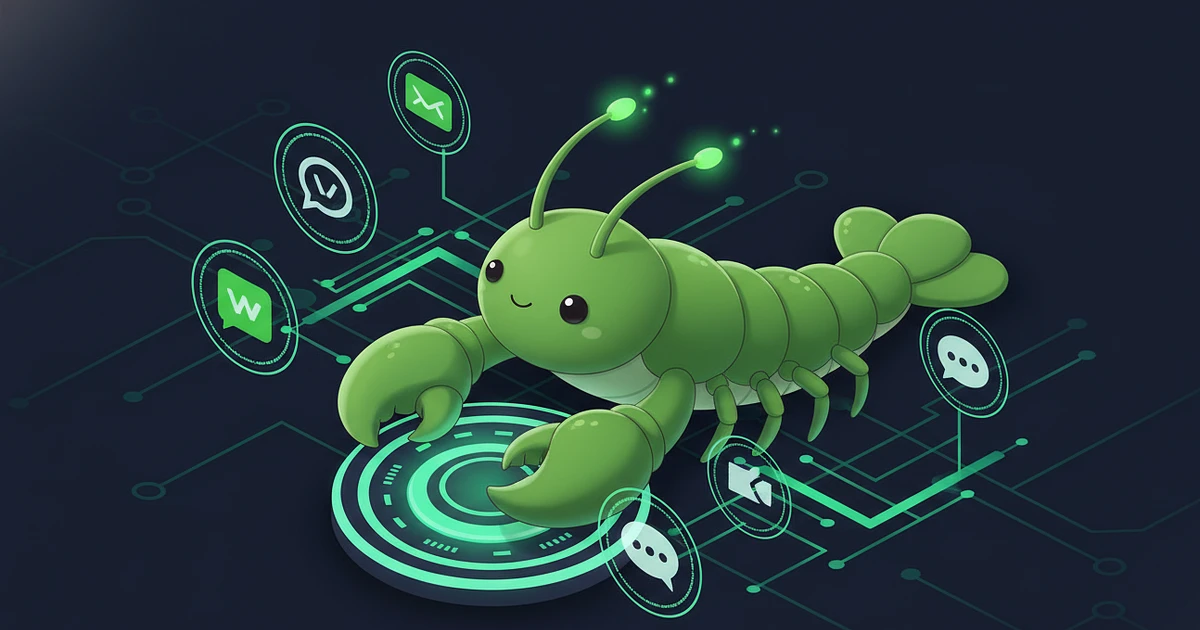
Tencent just gave 1.4 billion WeChat users an AI agent they can talk to like a friend. The feature is called ClawBot, and it runs on OpenClaw.
No app download. No separate interface. You add ClawBot as a contact on WeChat and message it the way you'd message anyone else. It reads your text, thinks, and responds — inside the same chat window where you talk to your family and coworkers.
ClawBot isn't a chatbot popup or a sidebar widget. It's a full OpenClaw-powered AI agent that lives inside WeChat's messaging layer. Tencent built it using OpenClaw's messenger connector architecture, the same system that powers Telegram and WhatsApp integrations on other platforms.
The difference is scale. WeChat has 1.4 billion monthly active users, most of them in China. This is the largest single deployment of an OpenClaw-based agent to date.
Three reasons.
OpenClaw just got stress-tested at a scale most enterprise software never sees. If the framework handles WeChat's user base, the "is OpenClaw production-ready?" conversation is over.
The contact-style AI agent is a new paradigm. Most AI tools today are separate apps or browser extensions. ClawBot treats the AI as a person in your contact list. That's a fundamentally different user experience — one that feels natural instead of technical.
China's AI race just shifted from models to deployment. DeepSeek was the 2025 story about Chinese AI models competing with the West. OpenClaw on WeChat is the 2026 story about AI agents reaching consumers at massive scale.
Tencent has a 4,000-person engineering team behind this integration. You don't need one.
ClawHosters deploys OpenClaw instances with Telegram and WhatsApp messenger connectors built in. Same architecture Tencent used for WeChat, minus the complexity. Your users message your AI agent like a contact — same paradigm, your brand, deployed in under a minute.
The self-hosted vs managed comparison breaks down what you get out of the box.
ClawBot is an OpenClaw-powered AI agent integrated directly into WeChat by Tencent. Users add it as a contact and interact through regular messages, the same way they'd chat with another person.
ClawBot runs on the open-source OpenClaw framework. Tencent built a WeChat-native connector using OpenClaw's messenger integration architecture — the same underlying technology available to any OpenClaw deployment.
Yes. OpenClaw supports messenger integrations for Telegram, WhatsApp, and other platforms. ClawHosters offers managed deployment with messenger connectors included, no infrastructure team required.
*Last updated: March 2026*

On May 10, Hermes Agent by Nous Research passed OpenClaw in daily token usage on OpenRouter. Hermes hit 224 billion daily tokens against OpenClaw's 186 billion. By May 21 the gap had widened: 458 billion vs 173 billion.
A UK CEO's live OpenClaw instance showed up on BreachForums in February. Price tag: $25,000 in Monero. The listing advertised full access to the CEO's AI conversations, production database, Telegram bot tokens, and Trading 212 API keys. All stored in plaintext Markdown files.
On April 22, 2026, OpenAI announced Workspace Agents for ChatGPT Business and Enterprise customers. Think always-on, cloud-hosted AI agents that plug into Slack, Salesforce, Google Drive, and about a dozen other enterprise tools.