ClawHosters
by Daniel Samer
4 min read
Loading...
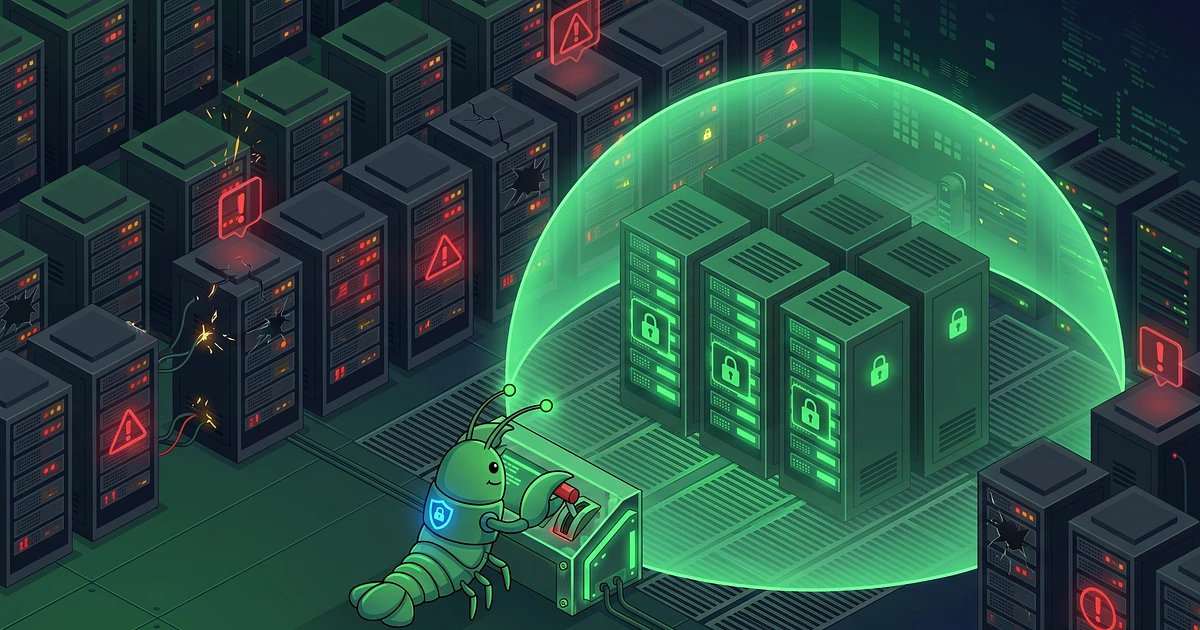
A UK CEO's live OpenClaw instance showed up on BreachForums in February. Price tag: $25,000 in Monero. The listing advertised full access to the CEO's AI conversations, production database, Telegram bot tokens, and Trading 212 API keys. All stored in plaintext Markdown files.
That's not a hypothetical. It already happened. And it's the most visible openclaw enterprise security failure of 2026.
According to VentureBeat's RSAC 2026 report, Cato Networks VP Etay Maor ran a live Censys scan and counted nearly 500,000 internet-facing OpenClaw instances. The week before? 230,000. Six months earlier at launch, there were roughly 6,300.
Bitsight documented an even sharper spike earlier in the year: 679 exposed instances on January 27, climbing to over 31,000 by February 8. That's a 46x increase in twelve days.
And here's the part that should concern every IT team: Token Security found that 22% of enterprise customers had employees running OpenClaw without IT approval. A textbook openclaw shadow AI problem. Employees connected these agents to corporate Slack, Gmail, and GitHub within minutes. No security review. No one knew. That makes OpenClaw a shadow IT risk at enterprise scale, a category IT security teams are already stretched to address.
OpenClaw is open-source software built for individual deployment. That's its strength and the root of every openclaw enterprise security problem IT teams are now inheriting. There is no openclaw kill switch. No fleet management console. No centralized audit logging. No way for a security team to discover, inventory, or shut down rogue instances across the organization.
Microsoft's security team classifies self-hosted OpenClaw as "untrusted code execution with persistent credentials." They run OpenClaw internally with over 3,000 employees, but through full Entra ID governance. The unmanaged version? That's the one they're warning about.
When a vulnerability drops (and three high-severity CVEs have already been published), there's no mechanism to push patches fleet-wide. Each instance operator has to update manually. If they even know the patch exists. Our security hardening guide for self-hosted OpenClaw covers the manual steps you'll need to take for each patch.
Managed hosting addresses the specific attack vector the BreachForums listing exploited.
On ClawHosters, each instance runs on an isolated VPS with managed firewall and infrastructure-layer encryption. Credentials don't sit in plaintext Markdown files on someone's filesystem. They're stored at the infrastructure layer, encrypted, not user-accessible. When a CVE drops, patches go out to all instances at once. IT sees all deployments in one dashboard instead of finding out about rogue instances from a security audit.
The self-hosted model isn't broken. It's just designed for individual use. Managed hosting layers the controls enterprise teams actually need on top of it. That's the openclaw enterprise security gap that managed hosting actually closes.
If your IT team is trying to get ahead of this before the next CVE drops, the self-hosted vs managed comparison covers the full technical difference. See our pricing plans or read the comparison for the full breakdown.
It's not about the software itself. OpenClaw is fine. The risk is deployment. Without centralized controls, IT can't find instances employees have spun up, push security patches, or shut down a compromised agent quickly. Managed hosting fixes that specific openclaw enterprise security gap. Self-hosted doesn't.
In February 2026, a threat actor listed a UK CEO's live OpenClaw instance for $25,000 on BreachForums. The listing included access to the CEO's AI conversations, full production database, API keys, and Telegram bot tokens. All data was stored unencrypted in plaintext files. The openclaw breachforums incident isn't isolated. It's the visible tip of a broader unmanaged deployment problem.
Three things. First, credentials never touch a user-accessible filesystem. They live at the infrastructure layer, encrypted. Second, patches go out automatically. There's no "hoping your team saw the CVE." Third, IT can see and manage all instances from one dashboard instead of chasing down who installed what on their work laptop.
*Last updated: June 2026*

On May 10, Hermes Agent by Nous Research passed OpenClaw in daily token usage on OpenRouter. Hermes hit 224 billion daily tokens against OpenClaw's 186 billion. By May 21 the gap had widened: 458 billion vs 173 billion.
On April 22, 2026, OpenAI announced Workspace Agents for ChatGPT Business and Enterprise customers. Think always-on, cloud-hosted AI agents that plug into Slack, Salesforce, Google Drive, and about a dozen other enterprise tools.
One in thirteen skills on ClawHub is malicious. That's the finding from a follow-up scan by Koi Security and Termdock published February 16, 2026: 824 malicious skills out of 10,700+ total. A 7.7% infection rate on the official skill marketplace for OpenClaw.