ClawHosters
by Daniel Samer
4 min read
Loading...
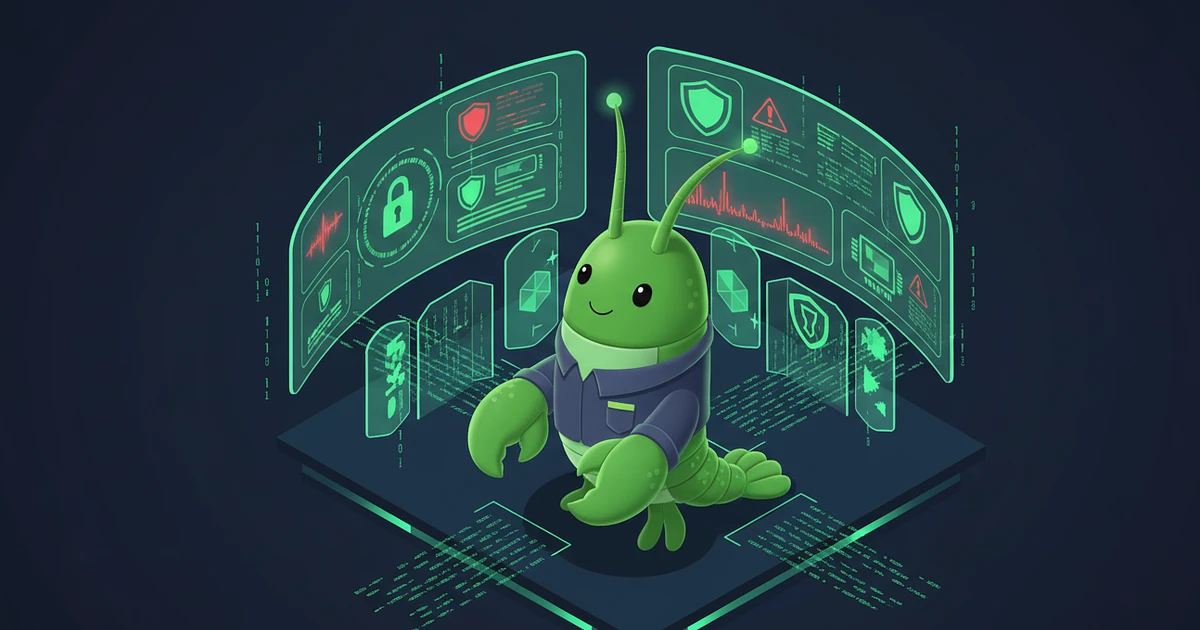
Any website could hijack your locally running OpenClaw agent. No clicks, no permissions, no user interaction at all. That's the reality Oasis Security uncovered with CVE-2026-25253, a vulnerability they nicknamed "ClawJacked." OpenClaw v2026.2.25, released February 26 by 24 contributors, patches it along with 30+ other security fixes.
If you self-host OpenClaw, update now.
The attack is surprisingly simple. You visit a malicious website. Hidden JavaScript opens a WebSocket connection to localhost on your OpenClaw gateway port. Browsers don't block WebSocket-to-localhost connections the way they block regular cross-origin requests. The script brute-forces your gateway password at hundreds of attempts per second (there was no rate limiting) and, because OpenClaw auto-approved device pairings from localhost, the attacker gets registered as a trusted device.
From there? Full agent takeover. Shell commands, API keys, connected services like Slack and Telegram. As CSO Online reported, Jason Soroko of Sectigo called the browser "a porous membrane, permitting untrusted JavaScript to bridge the gap to local services via WebSockets."
The OpenClaw team fixed it within 24 hours of disclosure. The v2026.2.25 release now enforces origin validation on browser WebSocket clients, throttles password-auth failures on loopback, and blocks auto-approval for unpaired devices.
ClawJacked is the headline, but it's not the whole story. This release touches almost every surface of the security model. Reaction events on Discord, Slack, Signal, and Telegram now enforce channel authorization. Filesystem sandbox escapes via symlinks and hardlinks are blocked. Webhook authentication for Nextcloud Talk and LINE rejects unsigned traffic before reading the body. OAuth cleanup removes a PKCE verifier leak. And IPv6 SSRF protection now classifies multicast addresses as private targets.
If you've been following the previous security release, this continues that hardening trajectory.
Android users get GitHub-flavored markdown rendering, better streaming under spotty connections, and faster cold starts. Small but noticeable.
The bigger architectural change is the subagent dispatch refactor. It's been rebuilt as an explicit queue/direct/fallback state machine, replacing the old implicit dispatch logic. For multi-agent setups, this means more reliable agent-to-agent communication. One breaking change to watch: heartbeat DM delivery defaults flipped from "block" to "allow." Check your config if that matters to you.
If you're on a managed ClawHosters plan, you're already patched. We rolled out v2026.2.25 across all managed instances within hours of release. That's the point of managed hosting. You don't have to track CVEs or scramble to update at midnight.
For self-hosters, the security hardening guide covers the basics. But if you'd rather not worry about it, we handle that part.
ClawJacked (CVE-2026-25253) is a vulnerability discovered by Oasis Security that allowed any website to hijack a locally running OpenClaw agent via WebSocket connections to localhost. The attack required no user interaction and could give attackers full control over the agent, including shell access and API keys.
No. ClawHosters rolled out the v2026.2.25 patch across all managed instances within hours of release. Your instance is already running the fixed version.
Pull the latest release from the official OpenClaw repository on GitHub. The v2026.2.25 release notes include upgrade instructions. If you run Docker, pull the updated image and restart your container.
Yes. Heartbeat DM delivery now defaults to "allow" instead of "block." If you previously relied on the blocking default, set `agents.defaults.heartbeat.directPolicy: "block"` in your config to restore the old behavior.
The release includes 30+ documented security fixes across gateway authentication, reaction authorization, filesystem sandboxing, webhook validation, OAuth cleanup, and IPv6 SSRF protection, plus the ClawJacked patch.

On May 10, Hermes Agent by Nous Research passed OpenClaw in daily token usage on OpenRouter. Hermes hit 224 billion daily tokens against OpenClaw's 186 billion. By May 21 the gap had widened: 458 billion vs 173 billion.
A UK CEO's live OpenClaw instance showed up on BreachForums in February. Price tag: $25,000 in Monero. The listing advertised full access to the CEO's AI conversations, production database, Telegram bot tokens, and Trading 212 API keys. All stored in plaintext Markdown files.
On April 22, 2026, OpenAI announced Workspace Agents for ChatGPT Business and Enterprise customers. Think always-on, cloud-hosted AI agents that plug into Slack, Salesforce, Google Drive, and about a dozen other enterprise tools.