ClawHosters
by Daniel Samer
3 min read
Loading...
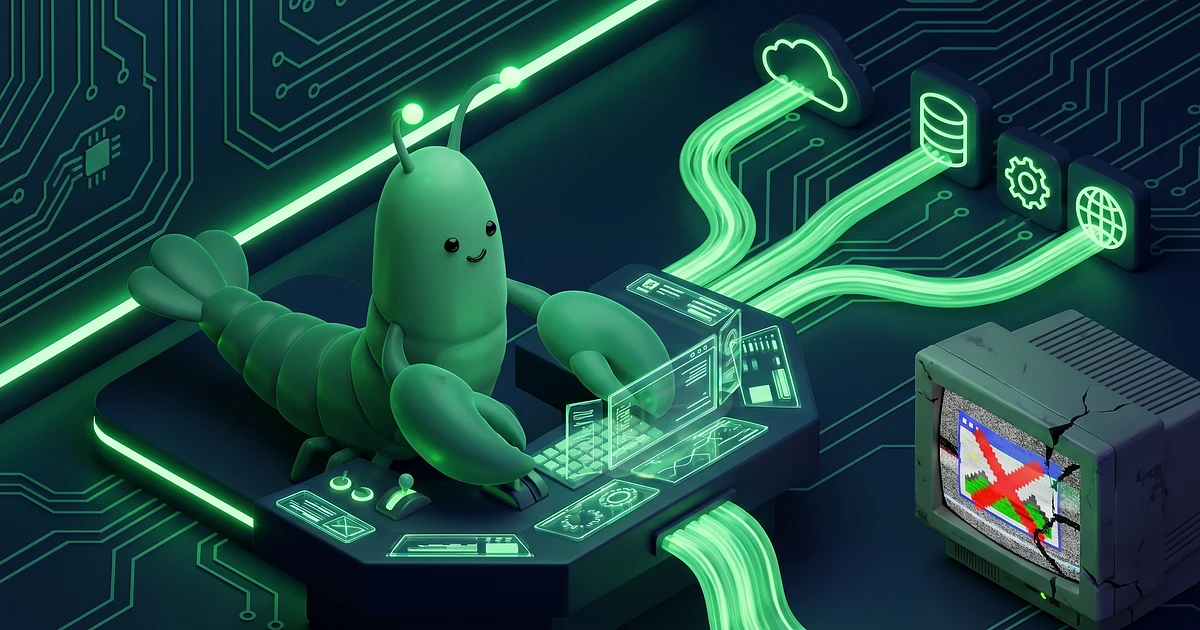
Google quietly shut down Project Mariner on May 4, 2026. No public announcement. No blog post. Just removed.
The timing is hard to ignore. Google I/O 2026 kicks off May 19, where Google will unveil Remy, their new 24/7 personal agent. Project Mariner had to be cleared off the stage first.
Launched in December 2024 and demoed at I/O 2025, Project Mariner was Google's attempt at a browser-based AI agent that worked by taking screenshots of webpages and visually "reading" them. Every click required a vision pass. Every form field needed OCR-style reasoning. The idea sounded clever on paper.
In practice, it was too slow, too expensive, and too error-prone at scale. Seventeen months of development, and the approach never got past its core limitation: screenshots are a terrible interface for automated systems.
Google folded Mariner's tech into two products. Gemini Agent, their new task-automation layer, got some of the underlying models. Chrome also picked up an Auto Browse feature, though it's restricted to AI Pro and Ultra subscribers in the US only.
The first warning signs appeared in March 2026 when Google moved staffers off the Mariner team. By early May, the project was gone.
The screenshot approach tried to make AI interact with the web the way humans do. But that was always the wrong abstraction. APIs exist for a reason: they're faster, cheaper, and more reliable than parsing pixels.
OpenClaw, with over 368K GitHub stars, takes the opposite approach. It connects to services through APIs and the Model Context Protocol (MCP), not by staring at rendered HTML. When you need your agent to interact with a tool, you give it a direct connection, not a magnifying glass.
That difference matters for reliability. A screenshot-based agent fails when a button moves 20 pixels. An API-based agent keeps working until the API changes, which is versioned and documented. If you're running an OpenClaw instance through ClawHosters, your agent talks to external services directly. No pixel-parsing middleman.
Google seems to agree now. Remy, their replacement, is expected to lean heavily on structured tool calls rather than visual browsing. The screenshot era lasted 17 months. The API-first approach keeps winning.
Google shut down Project Mariner on May 4, 2026, after 17 months of development. The screenshot-based browser agent proved too slow and expensive at scale. Its technology was folded into Gemini Agent and Chrome's Auto Browse feature, which is only available to AI Pro/Ultra subscribers in the US.
Every interaction required a vision pass to "read" the webpage visually, and form fields needed OCR-style reasoning. This made the agent slow, expensive, and fragile. When a webpage layout changed slightly, the agent broke. API-based agents like OpenClaw avoid this by connecting to services directly rather than parsing rendered pixels.
Google is expected to unveil Remy at I/O 2026 on May 19, a 24/7 personal agent that likely uses structured tool calls instead of visual browsing. Competitors like OpenAI's ChatGPT Atlas and Perplexity's Comet had already moved past the screenshot approach by late 2025.
*Last updated: May 2026*
On May 10, Hermes Agent by Nous Research passed OpenClaw in daily token usage on OpenRouter. Hermes hit 224 billion daily tokens against OpenClaw's 186 billion. By May 21 the gap had widened: 458 billion vs 173 billion.
A UK CEO's live OpenClaw instance showed up on BreachForums in February. Price tag: $25,000 in Monero. The listing advertised full access to the CEO's AI conversations, production database, Telegram bot tokens, and Trading 212 API keys. All stored in plaintext Markdown files.
On April 22, 2026, OpenAI announced Workspace Agents for ChatGPT Business and Enterprise customers. Think always-on, cloud-hosted AI agents that plug into Slack, Salesforce, Google Drive, and about a dozen other enterprise tools.