ClawHosters
by Daniel Samer
3 min read
Loading...
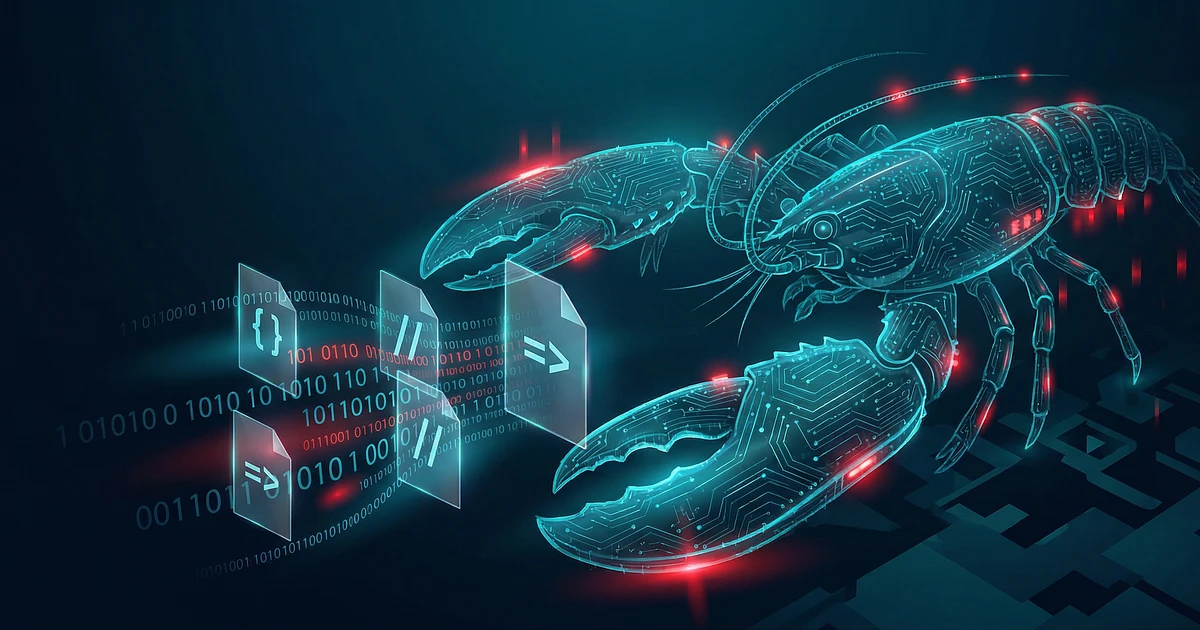
On February 13, 2026, Hudson Rock detected something that was probably inevitable. A Vidar infostealer sample had swept an infected machine's .openclaw/ directory and exfiltrated everything inside it. Gateway tokens. Private cryptographic keys. And the files that make your OpenClaw agent yours: SOUL.md, MEMORY.md, AGENTS.md.
This is the first confirmed case of an openclaw infostealer grabbing AI agent identity files in the wild.
The malware wasn't specifically targeting OpenClaw. Vidar is a generic credential stealer that grabs browser passwords, cookies, crypto wallets, and anything else that looks interesting on disk. The .openclaw/ directory just happened to be in the blast radius.
Here's what the attacker walked away with:
openclaw.json contained the gateway authentication token and the victim's email. device.json held both private and public cryptographic keys. And then the memory files: SOUL.md (the agent's personality and instructions), MEMORY.md (daily activity logs, personal context), and AGENTS.md (agent configuration).
Hudson Rock's CTO Alon Gal called the stolen data "a mirror of the victim's life and a set of keys to their local machine." That's not hyperbole. An attacker holding these files can impersonate the device on the gateway, access private communications, and read through what is essentially a diary of the victim's daily AI interactions.
Vidar was first. But RedLine and Lumma have since updated their FileGrabber modules to target .clawdbot directories too. No CVE was assigned because this isn't a software vulnerability. It's malware doing what malware does, just with a new target.
The pattern is familiar if you've watched the crypto space. Wallet files became infostealer targets the moment they held value. OpenClaw config files are next because they hold something arguably more personal: your AI agent's memory and identity.
Here's the part that matters if you run OpenClaw through ClawHosters. Your .openclaw/ directory, your gateway tokens, your private keys, your memory files, none of that sits on your laptop. It lives on an isolated VPS that an infostealer on your personal machine can't reach.
Self-hosted OpenClaw stores everything locally. One infected machine, one careless download, and an infostealer has your agent's entire identity. With managed hosting, there's nothing to steal from your device because the sensitive files aren't there.
If you're self-hosting and concerned, rotate your gateway tokens and API credentials immediately. Our security hardening guide walks through the full audit process. And our Safety Scanner can flag exposed configuration issues you might have missed.
The Vidar malware exfiltrated openclaw.json (gateway token, email), device.json (private and public keys), SOUL.md, MEMORY.md, and AGENTS.md. Together these files give an attacker full device impersonation capability and access to the victim's AI agent memory and identity.
No. With managed hosting like ClawHosters, your OpenClaw configuration, keys, and memory files live on an isolated VPS container. An infostealer on your laptop or desktop can only grab files stored locally. Since nothing sensitive is on your machine, there's nothing for it to find.
If you self-host OpenClaw, yes. Rotate your gateway authentication token and any API credentials immediately. Run a security audit on your `.openclaw/` directory permissions. If you use managed hosting, your credentials are already isolated from local malware threats.
*Last updated: February 2026*

On May 10, Hermes Agent by Nous Research passed OpenClaw in daily token usage on OpenRouter. Hermes hit 224 billion daily tokens against OpenClaw's 186 billion. By May 21 the gap had widened: 458 billion vs 173 billion.
A UK CEO's live OpenClaw instance showed up on BreachForums in February. Price tag: $25,000 in Monero. The listing advertised full access to the CEO's AI conversations, production database, Telegram bot tokens, and Trading 212 API keys. All stored in plaintext Markdown files.
On April 22, 2026, OpenAI announced Workspace Agents for ChatGPT Business and Enterprise customers. Think always-on, cloud-hosted AI agents that plug into Slack, Salesforce, Google Drive, and about a dozen other enterprise tools.