ClawHosters
by Daniel Samer
4 min read
Loading...
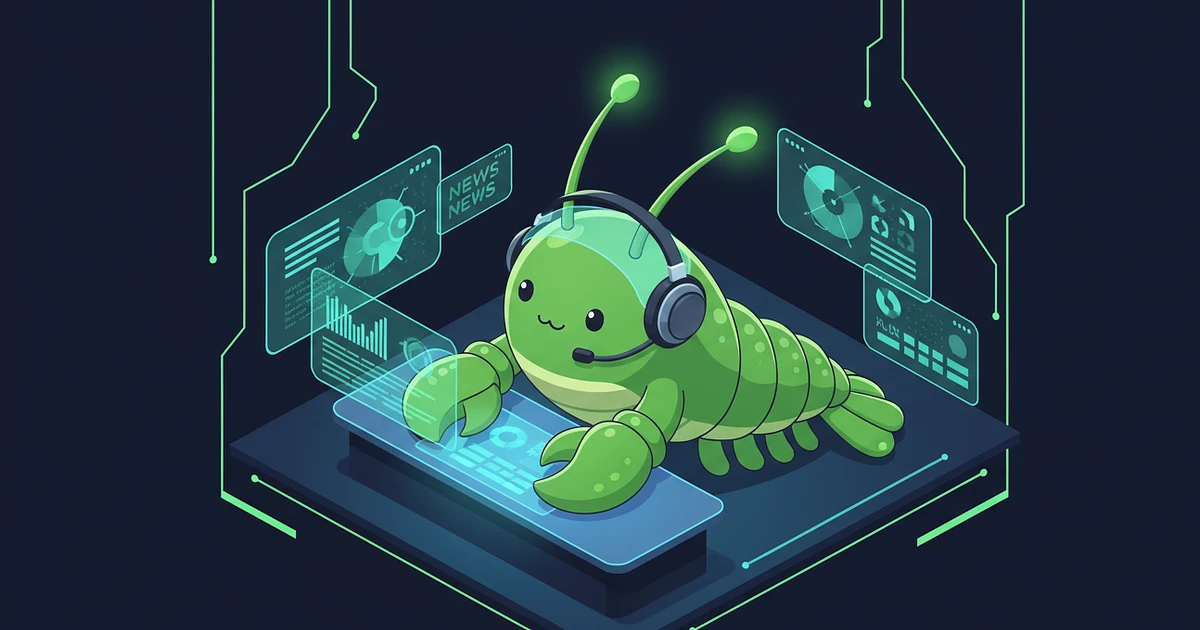
A new open-source AI agent framework called NanoClaw hit 7,000 GitHub stars within its first week of existence. It now sits at over 16,800. The pitch? OpenClaw functionality with actual OS-level container isolation, packed into roughly 3,900 lines of code.
That's not a typo. OpenClaw's codebase spans about 434,000 lines across 3,680 files.
NanoClaw was built by Gavriel Cohen, a former Wix.com engineer who wanted AI agents on messaging platforms (WhatsApp, Telegram, Discord, Slack, Signal) without the security trade-offs that come with a large, hard-to-audit codebase.
The core idea: every agent session runs inside its own Linux container. Docker on Linux, Apple Container on macOS. Agents can only access directories you explicitly mount. Nothing else on your host machine is reachable.
As Cohen told VentureBeat: "I cannot sleep peacefully when running software I don't understand and that has access to my life."
He has a point. In standard OpenClaw, a family WhatsApp agent and a work code repository agent share the same process and memory space. They're separated by application-level blocks, not OS-level sandboxing. NanoClaw removes that trade-off entirely by giving each agent its own isolated container.
The project hit the Hacker News front page within 48 hours. The New Stack covered it as a countertrend to AI framework bloat, and Cohen and his brother already run their AI agency Qwibit on a NanoClaw instance they named "Andy."
| NanoClaw | OpenClaw | |
|---|---|---|
| Codebase | ~3,900 lines, 15 files | ~434,000 lines, 3,680 files |
| Isolation | OS-level containers per agent | Shared process, app-level blocks |
| Dependencies | Fewer than 10 | 70+ |
| Platforms | WhatsApp, Telegram, Discord, Slack, Signal | Same plus more integrations |
| Audit time | ~8 minutes (creator's claim) | Days to weeks |
| Extension model | "Skills" (keeps core small) | Plugin system, growing codebase |
| Maturity | New, rapidly growing | Established, 150,000+ instances |
We're not going to pretend NanoClaw doesn't exist. It validates something we already know: developers running AI agents on messaging platforms care about security. A lot.
NanoClaw and ClawHosters approach the same problem differently. NanoClaw strips everything down to a minimal, auditable core and trusts you to manage the infrastructure yourself. ClawHosters gives you the full OpenClaw feature set with managed container isolation, automatic updates, and no exposed gateway. If you're curious about our approach, check our security hardening guide or our managed vs self-hosted comparison.
Both are valid paths. The fact that 16,800 developers starred a project built around "I don't trust my AI agent with my whole machine" probably tells you where the market is heading.
NanoClaw is a lightweight, open-source AI agent framework created by Gavriel Cohen under an MIT License. It runs AI agents on messaging platforms like WhatsApp and Telegram, with each agent session isolated inside its own Linux container. The project launched January 31, 2026.
No. NanoClaw is a ground-up rewrite with a completely different architecture. It shares the use case (AI agents on messaging platforms) but not the codebase. The design philosophy prioritizes auditability and OS-level isolation over feature breadth.
You can. NanoClaw is free and open source. The trade-off is that you manage your own infrastructure, updates, and security configuration. ClawHosters provides managed OpenClaw hosting with container isolation, automatic updates, backups, and no exposed gateway. It depends on how much infrastructure work you want to handle yourself. Plans start at $19/mo.
*Last updated: March 2026*

On May 10, Hermes Agent by Nous Research passed OpenClaw in daily token usage on OpenRouter. Hermes hit 224 billion daily tokens against OpenClaw's 186 billion. By May 21 the gap had widened: 458 billion vs 173 billion.
A UK CEO's live OpenClaw instance showed up on BreachForums in February. Price tag: $25,000 in Monero. The listing advertised full access to the CEO's AI conversations, production database, Telegram bot tokens, and Trading 212 API keys. All stored in plaintext Markdown files.
On April 22, 2026, OpenAI announced Workspace Agents for ChatGPT Business and Enterprise customers. Think always-on, cloud-hosted AI agents that plug into Slack, Salesforce, Google Drive, and about a dozen other enterprise tools.