ClawHosters
by Daniel Samer
3 min read
Loading...
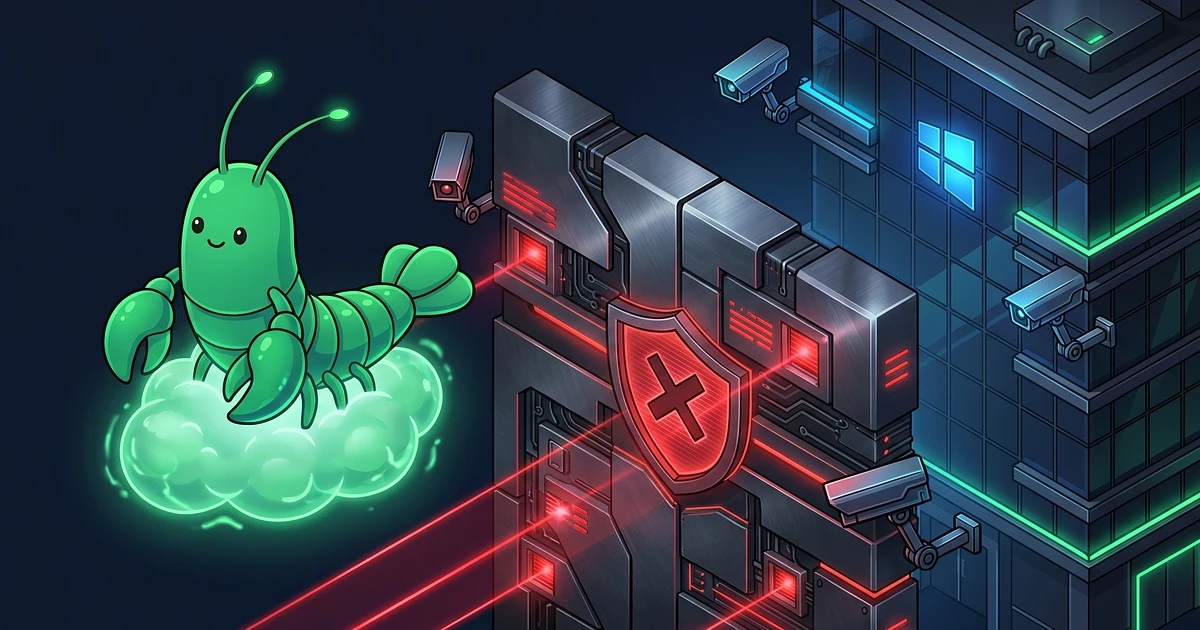
On May 1, 2026, Microsoft made Agent 365 generally available. And OpenClaw is the only agent it currently detects and blocks. Not one of many. The only one.
The official Microsoft Learn documentation confirms that IT admins can now apply an Intune policy called "A365 - Block OpenClaw" to managed Windows devices. Propagation takes between 15 minutes and 8 hours depending on organizational configuration.
The numbers tell the story. SecurityScorecard identified over 135,000 internet-exposed OpenClaw instances back in February 2026, many running from corporate IP ranges. Token Security found that 22% of monitored organizations have employees running OpenClaw without IT approval.
Employees were installing OpenClaw on company laptops with single-line commands. No approval process, no SOC visibility. Microsoft's Defender team now formally classifies OpenClaw as "untrusted code execution with persistent credentials."
That is a governance problem. And Microsoft built a governance tool for it.
Here is what makes this genuinely interesting. On the same day Agent 365 went GA with OpenClaw blocking, Microsoft's internal pilot "ClawPilot" (codenamed Project Lobster) jumped to over 3,000 daily users. That is 3,000 Microsoft employees running OpenClaw-based agents with full Entra ID identities, mailboxes, and Teams presence.
So Microsoft is not against OpenClaw. They are against unmanaged OpenClaw.
In June 2026, Defender Context Mapping enters public preview. This will map each detected agent to its host devices, MCP servers, identities, and cloud resources. The enforcement is getting more granular, not less.
Agent 365 targets local Windows device installations. That is the threat model: an OpenClaw instance running on a managed corporate laptop, binding to default port 0.0.0.0:18789, with credentials stored locally.
ClawHosters instances run on isolated cloud VPS infrastructure, not employee workstations. Your instance does not appear on corporate device scans. It does not bind to a managed Windows endpoint. The Intune policy has nothing to detect.
If your company runs ClawHosters, the architecture already satisfies what enterprise governance policies are trying to enforce. Dedicated infrastructure, controlled network access, no local credential exposure. That is exactly the difference between self-hosted and managed.
The enterprise crackdown is not about OpenClaw as technology. It is about OpenClaw as shadow IT. Managed hosting was always the answer to that problem. Microsoft just made the argument for us.
No. Agent 365 targets OpenClaw installations on managed Windows devices enrolled in Microsoft Intune. ClawHosters runs on dedicated cloud VPS infrastructure that is invisible to corporate device management policies.
OpenClaw is the most widely deployed autonomous AI agent in corporate environments. SecurityScorecard found over 135,000 internet-exposed instances by February 2026, and 22% of monitored organizations had unauthorized deployments.
No. Microsoft runs over 3,000 employees on their internal "ClawPilot" pilot, an OpenClaw-based system with enterprise identity governance. The blocking targets unmanaged local installations, not the technology itself.
A Defender feature entering public preview in June 2026 that maps detected AI agents to their host devices, configured MCP servers, associated identities, and reachable cloud resources. It adds deeper visibility beyond simple detection.
Shadow AI means employees running tools without IT awareness. A ClawHosters instance runs on controlled infrastructure with proper network configuration, not on a corporate laptop. It satisfies governance requirements by design, not by workaround.

On May 10, Hermes Agent by Nous Research passed OpenClaw in daily token usage on OpenRouter. Hermes hit 224 billion daily tokens against OpenClaw's 186 billion. By May 21 the gap had widened: 458 billion vs 173 billion.
A UK CEO's live OpenClaw instance showed up on BreachForums in February. Price tag: $25,000 in Monero. The listing advertised full access to the CEO's AI conversations, production database, Telegram bot tokens, and Trading 212 API keys. All stored in plaintext Markdown files.
On April 22, 2026, OpenAI announced Workspace Agents for ChatGPT Business and Enterprise customers. Think always-on, cloud-hosted AI agents that plug into Slack, Salesforce, Google Drive, and about a dozen other enterprise tools.