ClawHosters
by Daniel Samer
4 min read
Loading...
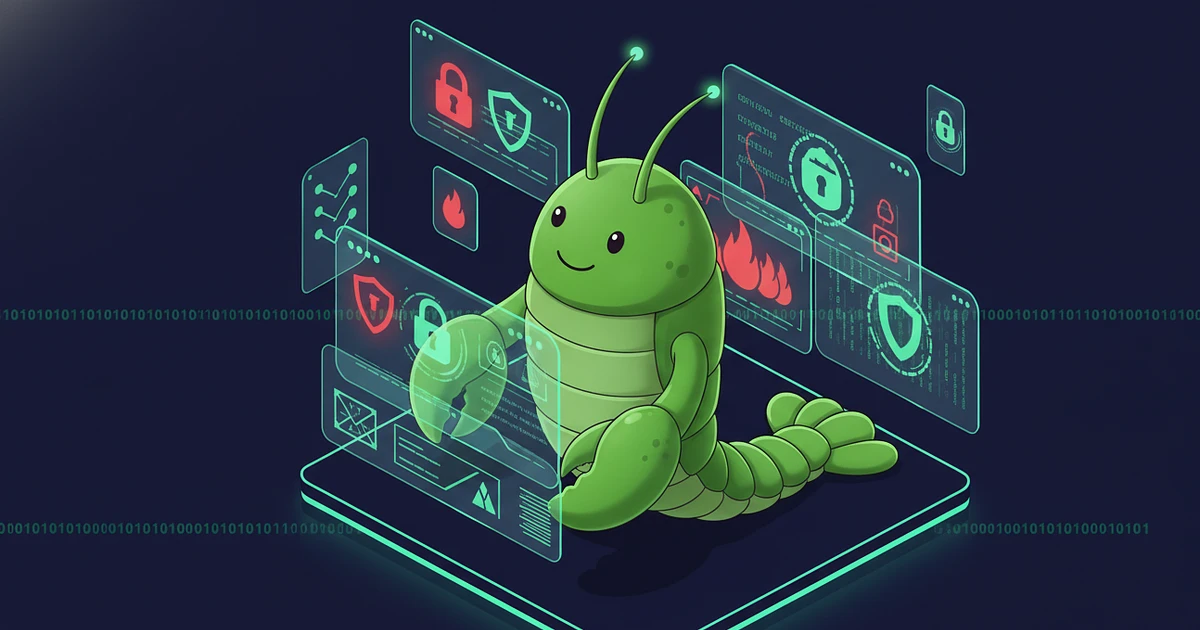
Your OpenClaw agent can now connect to over 10,000 APIs without your credentials ever touching the agent itself. Jentic Mini, released March 25, 2026 by Dublin-based startup Jentic, is a free, open-source API execution layer built specifically for OpenClaw and NemoClaw.
Think of it as a security checkpoint between your agent and the outside world.
The core idea is simple. Your OpenClaw agent wants to call an API. Instead of handing it your API keys directly, Jentic Mini sits in between. It holds the credentials in an encrypted vault, scopes permissions per toolkit, and gives you a killswitch to shut everything down if something goes sideways.
The whole thing runs as a single Docker container. FastAPI backend, SQLite storage. No cloud dependency. According to Silicon Republic's coverage, the catalog includes roughly 1,044 OpenAPI specs and around 380 Arazzo workflow sources.
That's a lot of APIs your agent can talk to without you handing over the keys to the castle.
As The New Stack pointed out, one of OpenClaw's biggest weak spots has been credential management when agents interact with third-party services. Jentic Mini addresses that gap directly.
Here's what you get:
Encrypted credential vault that lives on your infrastructure, not the agent's context
Toolkit-scoped permissions so agents only access what they need
Killswitch to revoke all API access instantly
Apache 2.0 license, completely free
Jentic CEO Sean Blanchfield put it this way: "The next era of software will not be built for humans. It will be built for agents, by agents." Whether or not you buy the vision fully, the security layer is practical and real.
If you're running OpenClaw through ClawHosters, your instance already sits behind managed security with auto-updates, backups, and monitoring. Jentic Mini adds another option for controlling how your agent talks to external services.
For self-hosters who need fine-grained API access control, this is probably the most straightforward solution available right now. For managed ClawHosters customers, it's an extra layer you can spin up alongside your instance if your workflows require heavy API integration. Check our security overview for how ClawHosters handles security at the infrastructure level.
The GitHub repository has everything you need. Single docker-compose up and you're running. If you're new to OpenClaw entirely, our quickstart guide covers the basics, and you can always start with a free trial.
Jentic raised $4.5M in pre-seed funding and became the first Irish company accepted into the AWS GenAI Accelerator. So this isn't a weekend project that might disappear next month.
Jentic Mini is a free, open-source API execution layer for OpenClaw agents. It manages API credentials securely in an encrypted vault and gives agents scoped access to over 10,000 APIs without exposing your keys directly to the agent.
Yes. ClawHosters runs standard OpenClaw instances, so Jentic Mini is fully compatible. You can deploy it as a separate Docker container alongside your managed instance for API access control.
Completely. It's licensed under Apache 2.0 with no usage limits. The source code is on GitHub and you can self-host it on your own infrastructure.
Not necessarily. ClawHosters already provides infrastructure-level security. Jentic Mini adds credential management specifically for third-party API access, which is useful if your agent workflows involve calling external services frequently.
The killswitch instantly revokes all API access for your agent. If you notice unexpected behavior or a security concern, you can shut down all external API calls with a single action, without stopping the agent itself.
*Last updated: March 2026*

On May 10, Hermes Agent by Nous Research passed OpenClaw in daily token usage on OpenRouter. Hermes hit 224 billion daily tokens against OpenClaw's 186 billion. By May 21 the gap had widened: 458 billion vs 173 billion.
A UK CEO's live OpenClaw instance showed up on BreachForums in February. Price tag: $25,000 in Monero. The listing advertised full access to the CEO's AI conversations, production database, Telegram bot tokens, and Trading 212 API keys. All stored in plaintext Markdown files.
On April 22, 2026, OpenAI announced Workspace Agents for ChatGPT Business and Enterprise customers. Think always-on, cloud-hosted AI agents that plug into Slack, Salesforce, Google Drive, and about a dozen other enterprise tools.