ClawHosters
by Daniel Samer
3 min read
Loading...
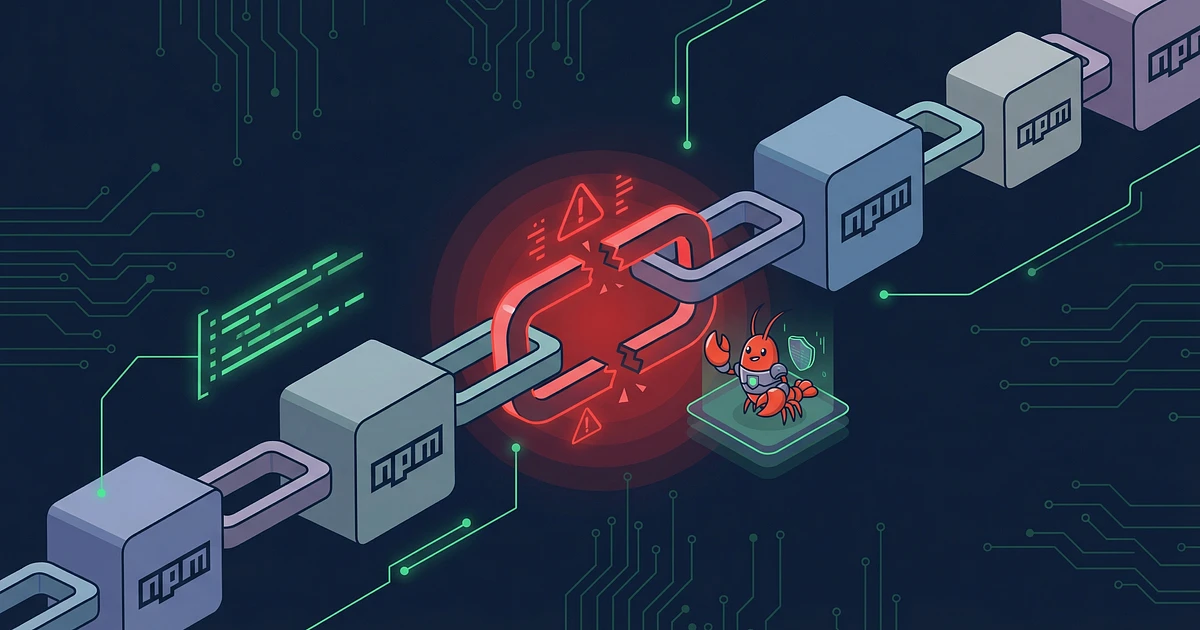
On February 17, 2026, somebody used a stolen npm publish token to ship cline@2.3.0 with one addition: a postinstall script that ran npm install -g openclaw@latest. Around 4,000 developers downloaded it before the Cline team pulled the package eight hours later.
OpenClaw itself isn't malware. But having it show up uninvited on your system? That's a problem.
Security researcher Adnan Khan had previously discovered what he called the "Clinejection" vulnerability. A prompt injection flaw in Cline's Claude Issue Triage GitHub Actions workflow allowed attackers to extract the NPM_RELEASE_TOKEN from CI. Khan reported the vulnerability responsibly, and Cline rotated their tokens on February 9.
Here's the problem. They deleted the wrong token. The exposed NPM_RELEASE_TOKEN stayed active.
Eight days later, a different unknown actor used that lingering token to publish the compromised package. The attack window ran from 3:26 AM to 11:30 AM Pacific Time. Cline revoked the correct token at 11:30 AM, published a clean v2.4.0, and posted their incident report.
The GitHub advisory GHSA-9ppg-jx86-fqw7 rates this as Low severity. OpenClaw is legitimate open-source software. The Gateway daemon (which would need broad system permissions) was never started by the postinstall script. So in practice, OpenClaw just sat there. Installed but dormant.
That said, an unauthorized global package install is still a supply chain breach. Treat it seriously even if nothing actively ran.
If you installed or updated Cline between 3:26 AM and 11:30 AM PT on February 17:
cline update or npm install -g cline@latest to get v2.4.0npm uninstall -g openclawnpm list -g openclaw to confirm it's goneIf you're running OpenClaw intentionally through ClawHosters, this doesn't affect your managed instance. Your deployment is isolated and wasn't touched by the npm incident. For extra peace of mind, run the OpenClaw Safety Scanner against your configuration.
Supply chain attacks on developer tools keep happening. This one was relatively benign because OpenClaw is real software, not a credential stealer. But the mechanism, a leftover npm token after an incomplete rotation, is exactly the kind of mistake that leads to worse outcomes next time. If you're evaluating how to run OpenClaw without worrying about npm supply chains, managed hosting sidesteps the problem entirely.
If you self-host OpenClaw and want to understand its permission model better, our security hardening guide walks through every surface area.
No. OpenClaw is legitimate open-source software. The compromised Cline package installed it globally via npm, but the Gateway daemon was never started. It sat on affected machines without executing. The severity rating is Low for this reason.
Run `npm list -g openclaw` in your terminal. If it shows up and you didn't install it yourself, you were affected. Remove it with `npm uninstall -g openclaw` and update Cline to v2.4.0 or later.
No. ClawHosters deployments run in isolated server environments and are not installed via npm. The compromised package only affected developers who installed Cline locally between 3:26 AM and 11:30 AM PT on February 17, 2026.
*Last updated: February 2026*

On May 10, Hermes Agent by Nous Research passed OpenClaw in daily token usage on OpenRouter. Hermes hit 224 billion daily tokens against OpenClaw's 186 billion. By May 21 the gap had widened: 458 billion vs 173 billion.
A UK CEO's live OpenClaw instance showed up on BreachForums in February. Price tag: $25,000 in Monero. The listing advertised full access to the CEO's AI conversations, production database, Telegram bot tokens, and Trading 212 API keys. All stored in plaintext Markdown files.
On April 22, 2026, OpenAI announced Workspace Agents for ChatGPT Business and Enterprise customers. Think always-on, cloud-hosted AI agents that plug into Slack, Salesforce, Google Drive, and about a dozen other enterprise tools.