ClawHosters
by Daniel Samer
3 min read
Loading...
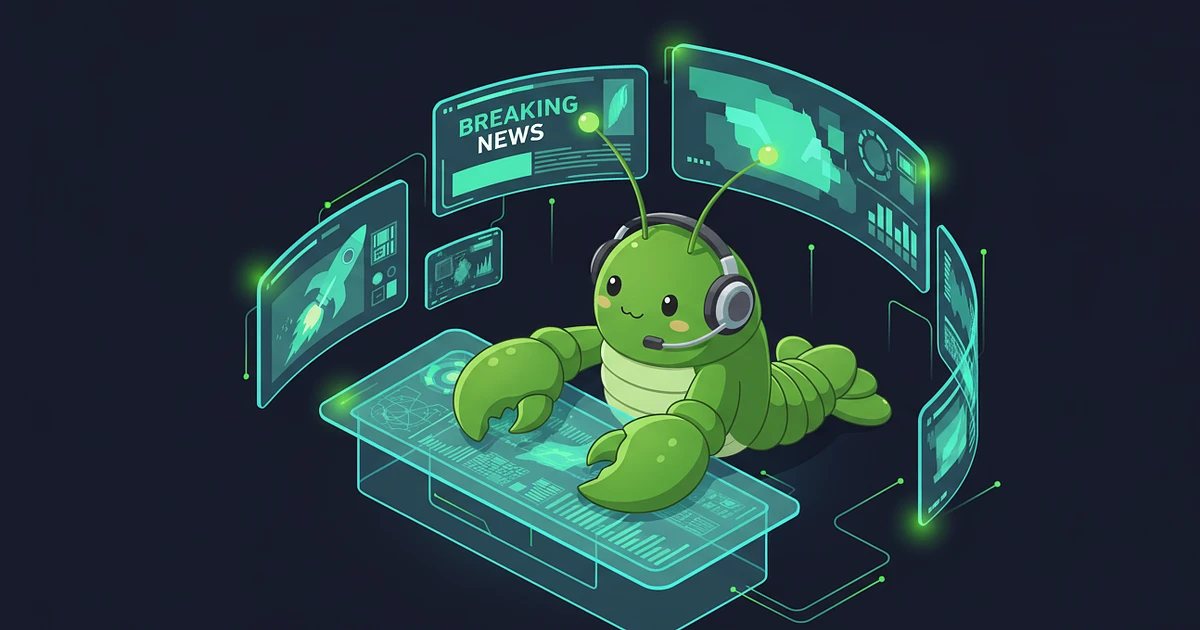
A Baidu employee walked on stage in Beijing last Monday, spoke a voice command to a Xiaodu smart speaker, and ordered a hot Americano from McDonald's. No screen. No app switching. The OpenClaw agent handled the whole thing, from navigating the McDonald's app to placing the order. Reuters reported that Baidu unveiled its full OpenClaw ecosystem on March 17, and honestly, the scope is impressive.
Baidu calls it the "lobster family." Four form factors, one agent framework.
DuMate sits on your desktop. RedClaw goes on your phone. Xiaodu brings OpenClaw into smart speakers (a first for the category). And DuClaw is the one that caught our attention: a fully managed, zero-deployment cloud service that gives you a running OpenClaw instance for about $2.50/month.
Sound familiar? It should.
DuClaw launched March 11 with a clear pitch. Baidu's own press release calls out "environment configuration, model integration, and system reliability" as the barriers it removes. No server setup. No API key juggling. No debugging Docker at midnight.
Baidu EVP Shen Dou told reporters this technology could become "an operating-system-level capability for a new era, unlocking almost all hardware and breaking down barriers between devices."
That's a big claim. But the strategy behind it makes sense. Baidu's AI cloud revenue grew 38% year-over-year, and managed infrastructure is clearly where they see the money.
DuClaw runs on Baidu's cloud, uses Chinese LLMs (DeepSeek, Kimi-K2.5, GLM-5), and integrates with Baidu Search and Baidu Baike. There's no international version. If you're outside China, DuClaw doesn't exist for you.
That's the gap ClawHosters fills. We've been running managed OpenClaw hosting globally since before DuClaw existed, with any LLM you choose, European data sovereignty, and honest pricing you can compare right now.
When one of the world's largest AI companies builds exactly what you've been building, that's not competition. That's validation.
China's "lobster fever" isn't slowing down. As Malay Mail reported, Tencent, ByteDance, and Alibaba are all racing to offer their own OpenClaw services. The managed hosting model is becoming the standard.
For the global market, though? That race is just starting.
DuClaw is Baidu's managed cloud hosting service for OpenClaw. It gives users a running OpenClaw instance without any server setup, starting at about $2.50/month. It's available in China only and runs on Baidu's cloud with Chinese LLMs.
No. DuClaw uses Baidu's infrastructure, Chinese language models, and Baidu-specific integrations. There's no international version announced. For managed OpenClaw hosting outside China, ClawHosters serves the global market.
Baidu's "lobster family" is a suite of four OpenClaw products: DuMate (desktop), RedClaw (mobile), Xiaodu (smart speakers), and DuClaw (managed cloud). Together they cover desktop, pocket, home, and cloud, making OpenClaw available across every major device category.
*Last updated: March 2026*

On May 10, Hermes Agent by Nous Research passed OpenClaw in daily token usage on OpenRouter. Hermes hit 224 billion daily tokens against OpenClaw's 186 billion. By May 21 the gap had widened: 458 billion vs 173 billion.
A UK CEO's live OpenClaw instance showed up on BreachForums in February. Price tag: $25,000 in Monero. The listing advertised full access to the CEO's AI conversations, production database, Telegram bot tokens, and Trading 212 API keys. All stored in plaintext Markdown files.
On April 22, 2026, OpenAI announced Workspace Agents for ChatGPT Business and Enterprise customers. Think always-on, cloud-hosted AI agents that plug into Slack, Salesforce, Google Drive, and about a dozen other enterprise tools.