ClawHosters
by Daniel Samer
6 min read
Loading...
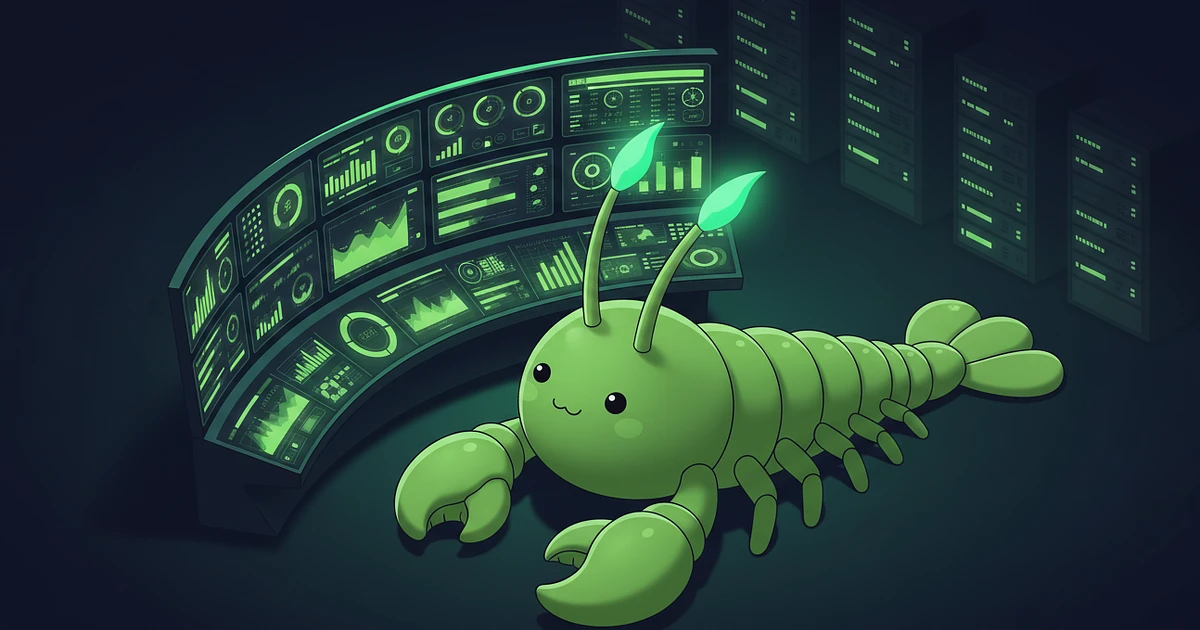
Your OpenClaw instance is running. Users are chatting with it. But do you actually know what's happening inside?
Most people deploy their AI agent and then just... hope. Hope it responds fast enough. Hope token costs don't spike. Hope nothing breaks at 2 AM. That's not a strategy. That's gambling.
AI observability gives you real visibility into your OpenClaw agent's behavior in production. Not guesswork. Actual data. And the good news? OpenClaw ships with built-in support for it.
Traditional app monitoring tracks things like CPU and memory. Useful, but not enough for AI workloads. Your agent could be using 3% CPU while burning through $47 in tokens on a single runaway conversation.
LLM observability tracks what actually matters for AI agents:
Token cost per conversation. You want to catch that one user who discovered your agent will happily summarize entire books.
LLM response latency. If your provider takes 8 seconds to respond, your users leave.
Context window utilization. When conversations push close to the token limit, responses get weird. You want to know before users notice.
Error rates. Rate limits, timeouts, malformed responses. All the things that silently degrade experience.
Without this data, you're flying blind. I've seen instances where a single misconfigured system prompt doubled token costs for a week before anyone noticed.
OpenClaw emits telemetry data over OTLP (OpenTelemetry Protocol). You enable it in your openclaw.json diagnostics config:
{
  "diagnostics": {
    "enabled": true,
    "otlp_endpoint": "http://otel-collector:4317",
    "trace_sampling_rate": 1.0,
    "metrics_interval_seconds": 15
  }
}
Once enabled, OpenClaw exports three types of data:
Traces capture the full lifecycle of each request. From user message received, through LLM API call, to response delivered. You can see exactly where time is spent.
Metrics include token counts, latency histograms, active conversation gauges, and error counters. These feed directly into Prometheus.
Structured logs over OTLP give you searchable, queryable logs instead of flat text files. Filter by conversation ID, user, or error type.
The OpenClaw diagnostics docs walk through every configuration option. But honestly, the defaults work fine for most setups.
The architecture is straightforward:
OpenClaw → OTLP Collector → Prometheus → Grafana
OpenClaw generates telemetry. The OTLP Collector receives, processes, and routes it. Prometheus stores metrics as time series data. Grafana gives you dashboards and alerts.
If you've used Prometheus with OpenTelemetry before, this is the same pattern. Nothing exotic. As the team at SigNoz documented, you can get a full OpenClaw dashboard running in about 20 minutes.
For those running on a VPS, LumaDock's monitoring guide covers the full setup for tracking uptime, logs, metrics, and alerts on a single server.
Four panels that tell you everything:
Token spend over time. A line chart showing daily cost. Set an alert at 120% of your expected daily spend. Catches runaway conversations before they eat your budget. If you're looking to control costs further, check out our guide on token cost optimization.
P95 LLM latency. You probably don't care about average latency. You care about the worst 5% of requests. If P95 is under two seconds, your users are happy.
Context window fill rate. A gauge showing how close conversations get to the max token limit. When this hits 80%+, your agent starts dropping context. Bad responses follow.
Error rate by type. Rate limits, timeouts, and 500s from your LLM provider. Separate them. A spike in rate limits means you need to throttle or upgrade your API tier.
Don't create 50 alerts. Start with four:
These four catch probably 90% of production issues before your users report them.
If you're self-hosting OpenClaw, you'll need to set up and maintain this entire stack yourself. The collector, Prometheus storage, Grafana dashboards, alert routing. It works, but it's another thing to maintain.
On ClawHosters, your instance comes with built-in monitoring dashboards, automatic alerting, and usage tracking out of the box. No collector to configure. No Grafana to update. You get the observability without the ops work. Plans start at $19/mo, and every tier includes the monitoring stack.
Whether you run your own observability stack or let us handle it, the point is the same. Don't fly blind. Your AI agent is making decisions, spending money, and talking to your users every minute it's running. You should know what it's doing.
AI observability means tracking your AI agent's internal behavior in production. For OpenClaw, that includes token usage, LLM response times, error rates, and context window utilization. Without it, you can't detect cost spikes, slow responses, or degraded output quality until users complain.
Set `diagnostics.enabled` to `true` in your `openclaw.json` config file and point `otlp_endpoint` to your OTLP Collector. OpenClaw then exports traces, metrics, and structured logs automatically over the OTLP protocol.
Yes. Prometheus and Grafana are both open source. You can run the full observability stack on the same VPS as your OpenClaw instance. The only cost is server resources and your time maintaining it.
Start with four: token cost per day, P95 LLM response latency, context window utilization, and error rates by type. These four metrics catch most production issues before they become user-facing problems.
Yes. Every ClawHosters plan includes built-in monitoring dashboards, usage tracking, and automatic alerts. You don't need to set up Prometheus, Grafana, or any collector yourself.
Three open-source AI agent frameworks launched within two weeks of each other in early 2026. All three have the word "Claw" in the name. All three let you run your own AI assistant. And all three make completely different bets about what matters most.

Your OpenClaw agent reads, writes, searches the web, calls tools. But it can't hear you. And it can't talk back. Voice changes that, and it's not as complicated as you'd think.

Port forwarding your AI agent to the public internet is a terrible idea. OpenClaw has broad access to your system, shell, files, network, and it eagerly reaches out to external APIs. Exposing that to the open web is asking for trouble. Tailscale gives you encrypted remote access to your OpenClaw...