ClawHosters
by Daniel Samer
3 min read
Loading...
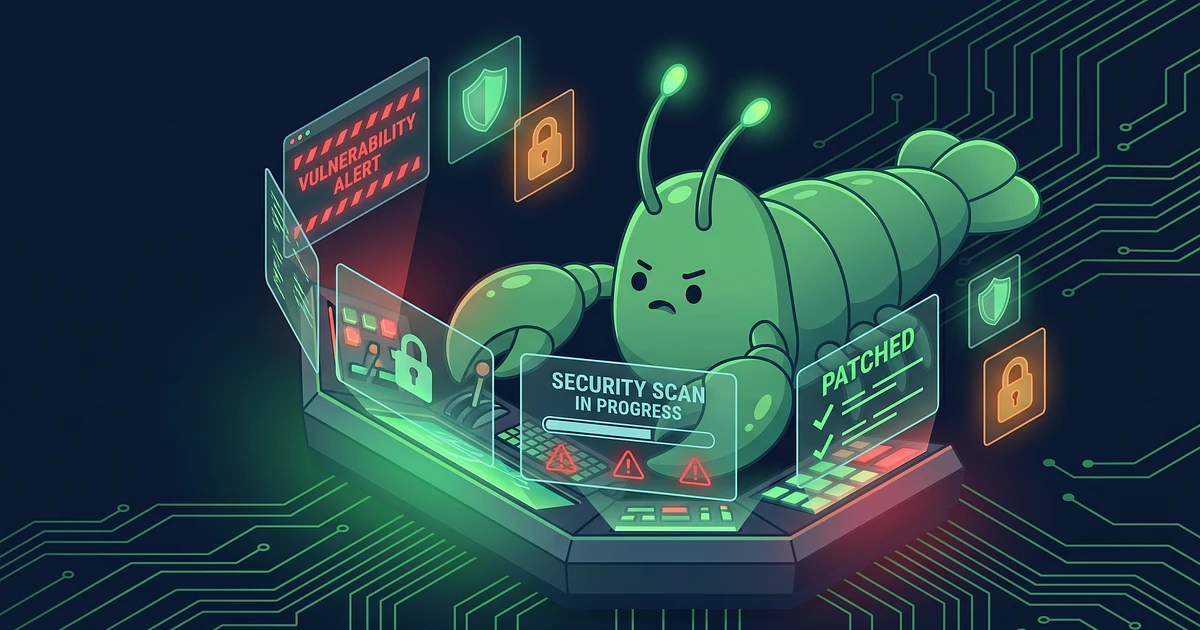
Security blog FlyingPenguin dropped a report on May 7 that should worry every self-hosted OpenClaw operator. The title alone says everything: "OpenClaw is Cooked: 433 CVEs Patched by Agents That Can't Fix What's Broken."
2.64 security failures per day. That's the math since OpenClaw launched in November 2025. The longest streak without a CVE? Twelve days, from February 7 to 18. That was the best it got.
FlyingPenguin's analysis attributes 376 of those CVEs to VulnCheck, a respected CNA. The rest came through other channels. But the raw count is only part of the story.
Here's what actually scares me:
63% of internet-reachable OpenClaw instances run with authentication disabled
42,900 exposed instances online right now
15,200 of those directly vulnerable to remote code execution
341 malicious skills flagged out of 2,857 reviewed on ClawHub (roughly 900 estimated by March)
Microsoft Defender now classifies OpenClaw as "untrusted code execution with persistent credentials." Oasis Security published a separate finding that any website you visit can silently take full control of a running OpenClaw agent. Think about that for a second.
FlyingPenguin groups the vulnerabilities into what they call "Flobster" categories. Trust-boundary collapse leads with 47 advisories. Authorization scope problems account for 41. Exec-boundary injection at 18, control-plane exposure at 10, and LLM-surface vulnerabilities round it out with three.
The pattern is clear: OpenClaw was built fast, shipped fast, and security was an afterthought.
Self-hosting OpenClaw means you're personally responsible for tracking and patching 2.6 CVEs per day. Every single day. Miss one, and you're potentially exposing your server to remote code execution.
Most people running OpenClaw at home don't even know these CVEs exist until a blog post like FlyingPenguin's goes viral.
On ClawHosters, security patches land before most users hear about the vulnerability. No public gateway exposure, no default-disabled auth, no localhost trust assumptions. That's not marketing talk. It's the result of running managed infrastructure where someone actually watches the CVE feeds daily.
If you want the full picture on how we handle this, our security hardening guide breaks down every layer. And the managed vs. self-hosted comparison puts the real trade-offs side by side.
Plans start at $3.90/month. Probably cheaper than the time you'd spend chasing 2.64 CVEs a day.
It depends entirely on your setup. FlyingPenguin documented 433 CVEs in 164 days, and 63% of public instances run without authentication. Self-hosted installations require constant patching. Managed platforms like ClawHosters apply patches proactively.
Based on FlyingPenguin's May 2026 report, OpenClaw has averaged 2.64 CVEs per day since its November 2025 launch. The longest gap without a new CVE was 12 days in February 2026.
Yes. ClawHosters applies security patches before most CVEs become public knowledge. Managed instances don't expose the gateway publicly, authentication is always enabled, and localhost trust boundaries are properly isolated.

On May 10, Hermes Agent by Nous Research passed OpenClaw in daily token usage on OpenRouter. Hermes hit 224 billion daily tokens against OpenClaw's 186 billion. By May 21 the gap had widened: 458 billion vs 173 billion.
A UK CEO's live OpenClaw instance showed up on BreachForums in February. Price tag: $25,000 in Monero. The listing advertised full access to the CEO's AI conversations, production database, Telegram bot tokens, and Trading 212 API keys. All stored in plaintext Markdown files.
On April 22, 2026, OpenAI announced Workspace Agents for ChatGPT Business and Enterprise customers. Think always-on, cloud-hosted AI agents that plug into Slack, Salesforce, Google Drive, and about a dozen other enterprise tools.