ClawHosters
by Daniel Samer
5 min read
Loading...
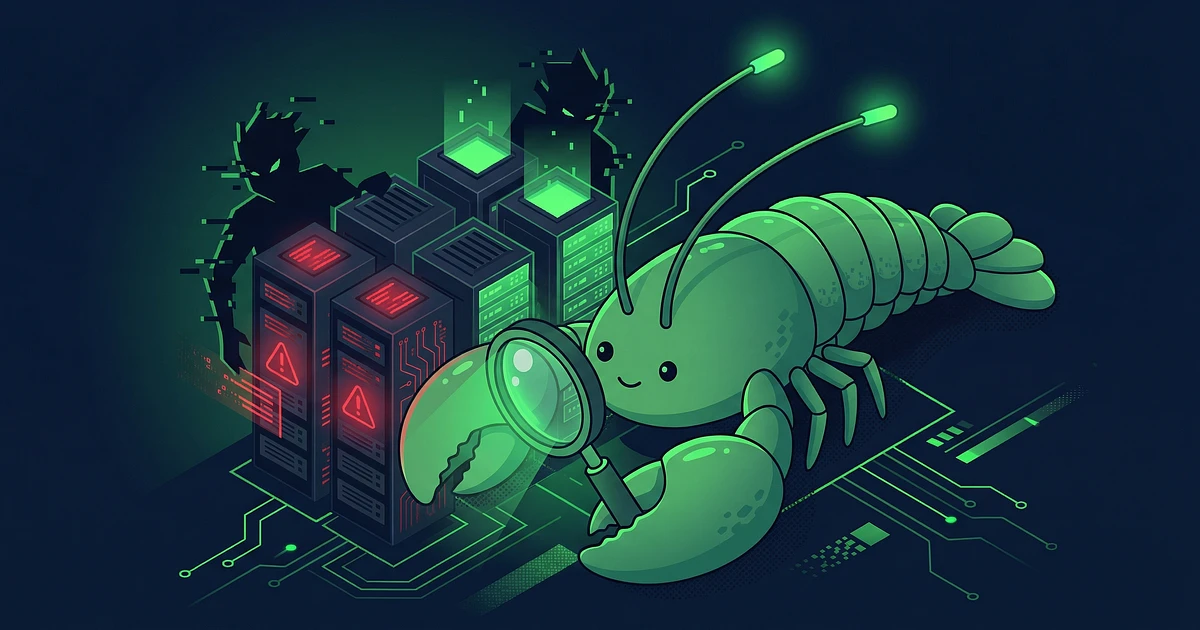
Shadow AI used to mean somebody on your team chatted with ChatGPT during lunch. Pasted some code, got an answer, moved on. Annoying for compliance, maybe, but the blast radius was small.
That was 2023.
In 2026, shadow AI means an employee installed an autonomous agent on their work laptop. That agent has shell access, reads files, sends emails, connects to Slack via OAuth, and stores your corporate API keys in a plaintext .env file. It runs in the background. It takes actions without being watched.
And according to Token Security, up to 22% of monitored corporate endpoints are already running OpenClaw or a variant without IT approval.
The distinction is not subtle. A chatbot is a text box. An AI agent is a credentialed actor inside your network.
OpenClaw crossed 250,000 GitHub stars in four months. It installs with a single npm install command. No admin privileges needed. The traffic it generates looks like standard HTTPS calls to Anthropic's API, indistinguishable from a developer using Claude legitimately.
Your firewall sees nothing unusual. Your DLP sees nothing unusual. But that agent can now read every file on the machine, execute arbitrary shell commands, and access whatever credentials the employee has saved locally.
The Microsoft Defender Security Research Team put it bluntly: OpenClaw "is not appropriate to run on a standard personal or enterprise workstation."
This is not theoretical. Here is what's already happening.
Credentials in plaintext. OpenClaw stores API keys for Anthropic, OpenAI, and AWS at ~/.clawdbot/.env. No encryption. The Lumma infostealer added that exact path to its target list. One compromised machine, and every credential the developer saved is exfiltrated.
One-click hijack. CVE-2026-25253 (CVSS 8.8) allowed any malicious website to take over a local OpenClaw agent via WebSocket. No plugins, no user interaction. Visit the wrong page and the attacker controls your agent, which controls your machine.
Poisoned marketplace. Bitdefender's analysis found roughly 800 malicious skills in ClawHub, about 20% of all available packages. Some sat dormant until specific prompts triggered payload execution and opened reverse shells.
And the financial cost? IBM's 2025 Cost of a Data Breach Report found that shadow AI adds an average of $670,000 in extra costs to breach incidents.
Every organization we've talked to falls into one of three camps.
1. Ban it. Meta warned employees they'd face termination for installing OpenClaw on work laptops. The problem? Developers who get banned use personal devices instead, taking corporate data to an even less secure environment. Banning doesn't kill demand. It pushes it underground.
2. Enterprise guardrails. Runlayer built ToolGuard, a governance layer that wraps around existing OpenClaw installations. Gusto deployed it and expanded governed agent use to roughly half their workforce. This approach works well for companies that want fine-grained policy control. But the agent still runs on the employee's machine. Credentials still live on the endpoint.
3. Managed hosting. This is what we built ClawHosters to solve. Move the agent off the employee's device entirely. Each instance runs in its own isolated Docker container on German infrastructure. Credentials are encrypted at rest, never stored on a corporate laptop. The employee accesses their agent through the browser or messaging apps.
No plaintext keys on endpoints. No ~/.clawdbot/.env for infostealers to target. No localhost WebSocket for malicious sites to exploit.
You can see how it works in our self-hosted vs managed comparison, or check out the security overview for the technical details.
If your corporate AI policy was written when the big concern was "employees pasting secrets into ChatGPT," it's outdated. As Citrix's Brian Madden puts it, most organizations are addressing a 2023 concern while the 2026 threat is agents that take actions, not just answer questions.
Banning probably won't work. Ignoring it definitely won't work. The question is whether you want your team's AI agents running unmonitored on corporate laptops, or isolated in containers where you control the credentials and the blast radius.
We think the answer is obvious, but we're biased. Plans start at $19/mo if you want to see for yourself.
Shadow AI refers to employees using AI tools, applications, or agent frameworks without formal IT or security approval. It evolved from simple chatbot usage in 2023 to full autonomous agent deployments in 2026, where agents can execute commands, access files, and take actions across corporate systems.
The primary risks include credential exposure through plaintext storage, remote exploitation via vulnerabilities like CVE-2026-25253, supply chain attacks through malicious marketplace skills, and compliance violations under GDPR and similar frameworks. IBM's research shows shadow AI adds $670K in average breach costs.
Shadow IT was unauthorized software that stored or processed data. Shadow AI agents actively take actions: they execute shell commands, send emails, modify files, and make API calls. A shadow IT tool might leak data passively. A shadow AI agent can act autonomously on your behalf, with your credentials.
Standard DLP and firewall tools often miss AI agent traffic because it uses standard HTTPS to legitimate API endpoints. Look for DNS requests to openclaw.ai domains, NPM package inventory checks, and mDNS broadcasts on port 5353. Behavioral detection is more reliable than traffic filtering.
Managed hosting moves the AI agent off the corporate endpoint entirely. Credentials are encrypted in the hosting environment, never stored on laptops. The agent runs in an isolated container, so even if compromised, it cannot access the corporate network. This eliminates the plaintext credential and localhost exploit attack surfaces.
*Last updated: March 2026*
Three open-source AI agent frameworks launched within two weeks of each other in early 2026. All three have the word "Claw" in the name. All three let you run your own AI assistant. And all three make completely different bets about what matters most.

Your OpenClaw agent reads, writes, searches the web, calls tools. But it can't hear you. And it can't talk back. Voice changes that, and it's not as complicated as you'd think.

Port forwarding your AI agent to the public internet is a terrible idea. OpenClaw has broad access to your system, shell, files, network, and it eagerly reaches out to external APIs. Exposing that to the open web is asking for trouble. Tailscale gives you encrypted remote access to your OpenClaw...