ClawHosters
by Daniel Samer
6 min read
Loading...
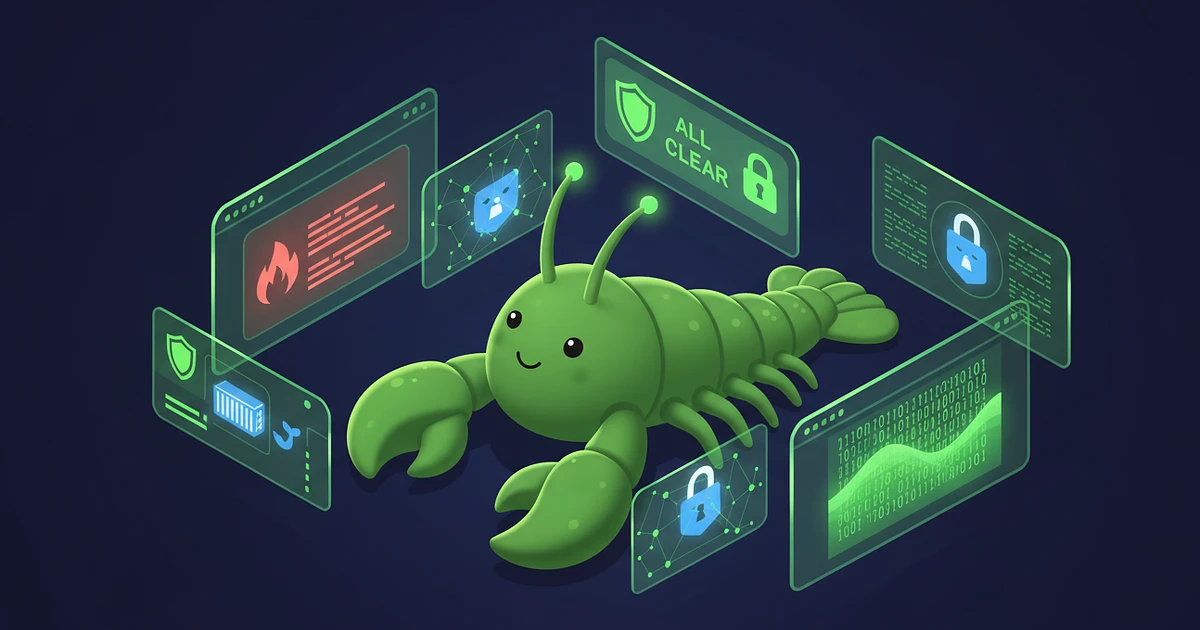
40,214 exposed OpenClaw instances. That's the number SecurityScorecard published last month. Of those, 63% are vulnerable, and 12,812 are confirmed exploitable via remote code execution. Let that sink in for a second.
Peter Steinberger, the creator of OpenClaw himself, put it bluntly: "Most non-techies should not install this. It's not finished, I know about the sharp edges." And yet thousands of people spin up containers without changing a single default.
I've personally watched someone extract API keys from an unsecured OpenClaw instance in 30 seconds. Not a sophisticated attack. Just a WebSocket connection and a crafted parameter. That's CVE-2026-25253 (CVSS 8.8), and it works on anything running default configs.
So here's how to actually lock things down.
58% of containers run as root by default. OpenClaw's Docker image is no exception.
Running as root means any exploit that escapes the application process has full control over the container, and potentially the host. Fix this first.
services:
  openclaw:
    user: "1000:1000"
    security_opt:
      - no-new-privileges:true
    cap_drop:
      - ALL
That cap_drop: ALL line is probably the single most impactful change you can make. It drops every Linux capability the container would otherwise inherit. The no-new-privileges flag prevents any process inside from escalating permissions through setuid binaries or similar tricks.
If your application needs specific capabilities (rare for OpenClaw), add them back individually with cap_add. But start from zero.
A read-only root filesystem stops attackers from modifying binaries, dropping malware, or planting persistence mechanisms inside your container.
services:
  openclaw:
    read_only: true
    tmpfs:
      - /tmp
      - /var/run
OpenClaw needs a few writable directories for temporary files. Mount those as tmpfs (in-memory only, wiped on restart). Everything else stays read-only.
Never use latest. I mean it.
When you pull openclaw:latest, you have zero guarantee about what's in that image. Pin to a specific digest instead.
image: openclaw/openclaw@sha256:abc123...
Netskope found over 300 trojanized Docker packages carrying LuaJIT payloads. The attack vector? Developers pulling unverified images from public registries. Pinning to a known-good digest means your builds are reproducible and you're not blindly trusting whatever showed up in latest this morning.
Run docker scout or Trivy against your images regularly. Automate it in CI if you can.
By default, OpenClaw's gateway listens on all interfaces. That means anyone who can reach your server can reach your AI agent.
services:
  openclaw:
    ports:
      - "127.0.0.1:8080:8080"
    networks:
      - openclaw-internal

networks:
  openclaw-internal:
    driver: bridge
    internal: true
Binding to 127.0.0.1 means only local traffic reaches the gateway. Put nginx or Caddy in front for TLS termination and access control.
Use a dedicated bridge network with internal: true so containers on that network can't reach the internet directly. Your AI agent doesn't need to browse the web.
This is the part most people skip, and honestly it's the part that matters most.
OpenClaw has a system.run tool that can execute arbitrary commands. If you don't restrict it, your AI agent can do anything the container user can do.
{
  "tool_policy": {
    "allowed": ["read_file", "write_file", "search"],
    "denied": ["system.run"]
  },
  "workspace": {
    "only": true,
    "deny_patterns": [".ssh/**", ".aws/**", ".env*", "*.pem"]
  }
}
Set workspaceOnly: true to keep file access within the project directory. Deny patterns block access to sensitive directories. And a tool policy allowlist ensures only the tools you explicitly approve are available.
As Jeremy Turner from SecurityScorecard warned: "Don't just blindly download one of these things and start using it on a system that has access to your whole personal life."
services:
  openclaw:
    deploy:
      resources:
        limits:
          cpus: "2.0"
          memory: 2G
    ulimits:
      nofile:
        soft: 1024
        hard: 2048
Without limits, a misbehaving agent or a denial-of-service attack can consume all system resources. Hard limits prevent that.
Here's the honest truth. Every hardening step I've described above is already built into ClawHosters managed infrastructure. Hetzner Cloud Firewall with whitelist-only access, Docker daemon hardening with no-new-privileges, fail2ban, SSH key-only authentication, automatic security updates.
Self-hosting OpenClaw securely takes 20 to 40 hours of initial setup and 2 to 4 hours per week of ongoing maintenance. Patching, monitoring, log auditing. That's real time you could spend building things instead.
Check out our security overview for the full breakdown, or read the self-hosted vs managed comparison if you're still deciding. We also have a free trial if you want to try it yourself.
Running as root with default capabilities. Combined with CVE-2026-25253 (unauthenticated RCE via WebSocket parameter injection, CVSS 8.8), an attacker can gain full container access in seconds. Drop all capabilities and run as a non-root user first.
Use Trivy or Docker Scout. Run `trivy image openclaw/openclaw:your-tag` to get a vulnerability report. Pin your images to specific digests rather than `latest` to avoid pulling compromised updates.
It can be, but it takes significant effort. You need to harden the container, configure firewalls, set up monitoring, and keep everything updated. Most people underestimate the ongoing maintenance. If security isn't your strength, a managed solution probably makes more sense.
Every instance runs with dropped capabilities, non-root users, read-only filesystems, and network isolation out of the box. We also run Hetzner Cloud Firewalls, fail2ban, automatic OS updates, and structured audit logging. You don't configure any of it.
Yes. Unless you specifically need your AI agent to execute shell commands, deny `system.run` in your tool policy. Combined with `workspaceOnly: true` and deny patterns for sensitive files, this prevents your agent from accessing anything outside its designated workspace.
*Last updated: March 2026*
Three open-source AI agent frameworks launched within two weeks of each other in early 2026. All three have the word "Claw" in the name. All three let you run your own AI assistant. And all three make completely different bets about what matters most.

Your OpenClaw agent reads, writes, searches the web, calls tools. But it can't hear you. And it can't talk back. Voice changes that, and it's not as complicated as you'd think.

Port forwarding your AI agent to the public internet is a terrible idea. OpenClaw has broad access to your system, shell, files, network, and it eagerly reaches out to external APIs. Exposing that to the open web is asking for trouble. Tailscale gives you encrypted remote access to your OpenClaw...