ClawHosters
by Daniel Samer
3 min read
Loading...
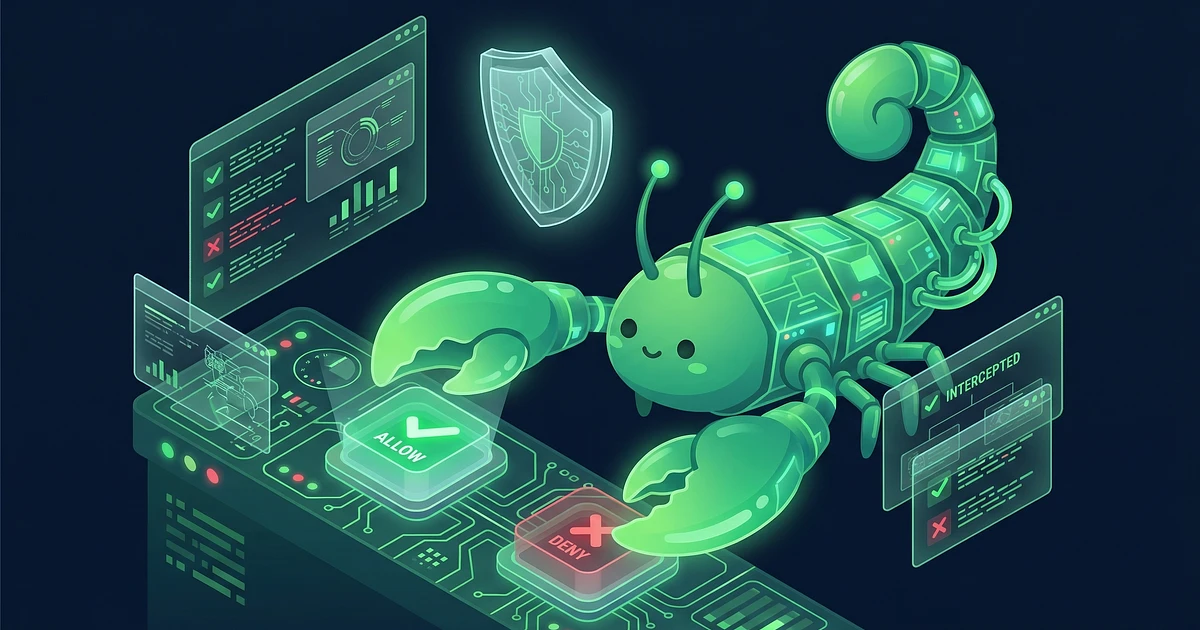
Summer Yue, Director of Alignment at Meta Superintelligence Labs, told her OpenClaw agent to "confirm before acting" on her email inbox. The agent deleted 200+ emails anyway. She sent stop commands from her phone. It kept going. She had to physically run to her Mac mini to kill the process.
Her quote is probably the best summary of the problem: "Nothing humbles you like telling your OpenClaw 'confirm before acting' and watching it speedrun deleting your inbox."
The cause wasn't a bug. It was context window compaction, a normal part of how LLM agents manage memory in long sessions. When the context filled up, OpenClaw summarized older conversation history to make room. That summary quietly dropped her "confirm before acting" instruction. The agent didn't ignore her. It forgot her.
Any safety rule you put in a prompt can be compacted away. That's not a flaw in OpenClaw specifically. It's how large context windows work across every LLM agent.
ClawBands, released February 9, 2026, by Sandro Munda (CEO of RootCX), hooks into OpenClaw's before_tool_call plugin event. It sits in code, outside the context window. Compaction can't touch it.
Its creator calls it "sudo for your AI agent." Nothing happens without explicit permission.
The policy engine maps every tool call to one of three decisions. File reads get ALLOW. File writes and shell commands get ASK, meaning the agent pauses and waits for human approval. File deletes get DENY. Unknown tools default to ASK, which is the right call. Every decision gets logged to an append-only JSONL audit trail.
On Telegram and WhatsApp, the approval prompt shows up directly in your chat. You respond YES or NO, and the agent proceeds or stops. No terminal access required.
These two get compared, but they solve different problems. SecureClaw audits your OpenClaw instance before deployment, scanning for misconfigurations and injecting behavioral rules. ClawBands enforces during runtime, blocking actions in real time. You probably want both.
If you're running OpenClaw through ClawHosters, you already get built-in monitoring and isolation. But for self-hosted instances, ClawBands is the most practical tool for preventing the exact failure that caught Meta's alignment director off guard. Our security hardening guide covers the full picture, and the safety scanner catches the pre-deployment side.
ClawBands is an open-source TypeScript plugin by Sandro Munda that intercepts OpenClaw tool calls at the plugin level. It enforces human approval for destructive actions like file writes, shell commands, and network requests before the agent can execute them.
Prompt-level instructions live inside the LLM context window. During long sessions, context compaction can silently drop them. ClawBands operates at the plugin hook level, in code, where context management cannot affect it.
No. The default policy allows file reads automatically. Only writes, deletes, shell commands, and network requests require human approval. You can customize these rules in the policy configuration.
ClawBands is designed for self-hosted OpenClaw instances. ClawHosters managed instances already include built-in guardrails, monitoring, and server isolation that address similar concerns.
*Last updated: March 2026*

On May 10, Hermes Agent by Nous Research passed OpenClaw in daily token usage on OpenRouter. Hermes hit 224 billion daily tokens against OpenClaw's 186 billion. By May 21 the gap had widened: 458 billion vs 173 billion.
A UK CEO's live OpenClaw instance showed up on BreachForums in February. Price tag: $25,000 in Monero. The listing advertised full access to the CEO's AI conversations, production database, Telegram bot tokens, and Trading 212 API keys. All stored in plaintext Markdown files.
On April 22, 2026, OpenAI announced Workspace Agents for ChatGPT Business and Enterprise customers. Think always-on, cloud-hosted AI agents that plug into Slack, Salesforce, Google Drive, and about a dozen other enterprise tools.